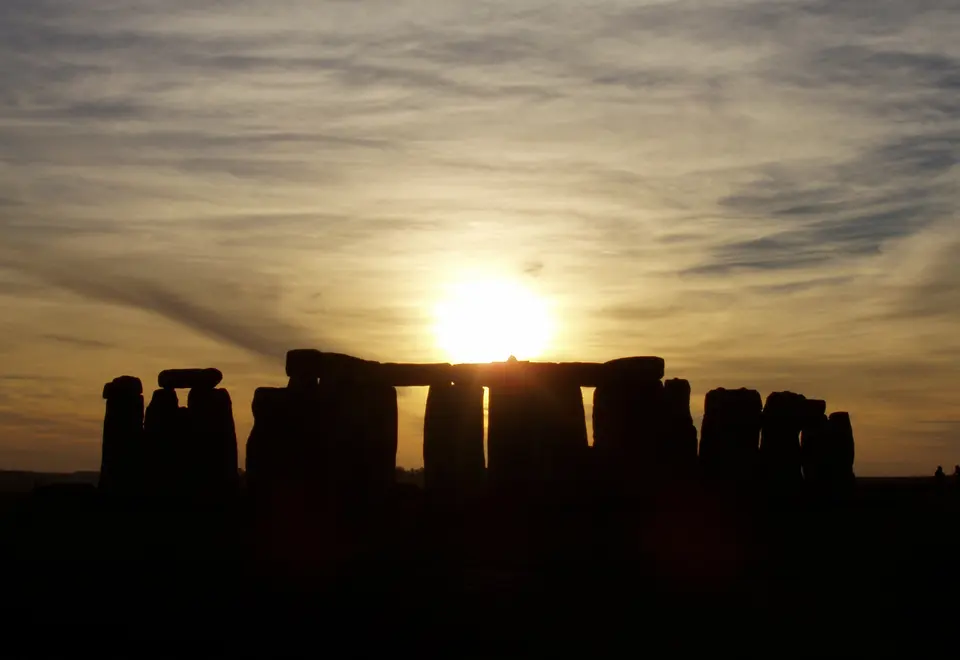
Imagine stepping outside tonight and looking at the sky.
The Moon sits near a bright star. Jupiter shines farther away. Clouds are forming above the horizon.
You watch for a while.
Then you go home.
By the next day, you probably remember very little of it.
Now imagine writing everything down.
The position of the Moon.
The planets.
The weather.
An eclipse.
The level of the river.
And, while you are at it, the price of barley and important political events.
Then someone does the same the next day.
And the next.
Then other people continue the work.
For centuries.
At some point, you are no longer simply watching the sky.
You are building a dataset.
Memory is no longer enough
In the previous chapter of our story, the sky served as a clock, a calendar and a map.
People recognised that certain events returned.
The Sun changed its rising position along the horizon and later returned. The Moon moved through its phases. Stars appeared and disappeared with the seasons.
That is enough to recognise a rhythm.
But there is an enormous difference between:
“this seems to happen from time to time”
and:
“we know when it happened before, where the Moon was, and what happened afterwards.”
For the first, memory may be enough.
For the second, you need records.
In Mesopotamia, traditions of observing and describing the sky developed over centuries. The surviving corpus known today as the Babylonian Astronomical Diaries stretches from roughly the seventh to the first century BC.
This is no longer a single description of an unusual eclipse.
Not one interesting comet.
It is a series of observations.
And that changes everything.
Night after night
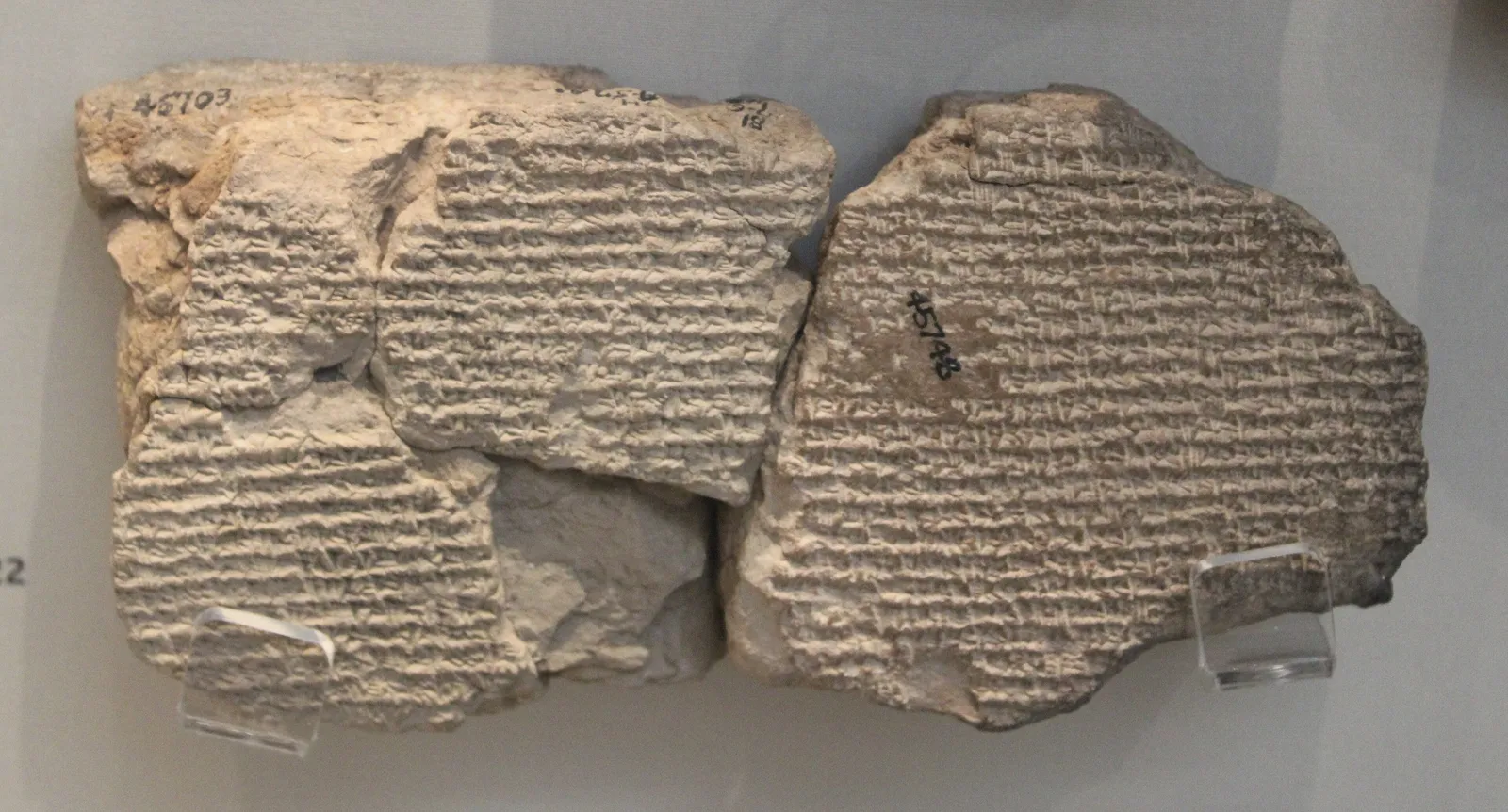
The texts we call the Astronomical Diaries were written in cuneiform on clay tablets.
Their authors were mainly interested in phenomena visible to the naked eye.
The position of the Moon.
Mercury, Venus, Mars, Jupiter and Saturn.
Eclipses.
First and last appearances of celestial objects.
Weather.
The same sky people had watched for thousands of years.
But now an observation did not disappear when the observer left.
It remained in clay.
Astronomy, weather and… the price of barley
This is where the Diaries become especially interesting.
Alongside information about the sky, they contain things we would not normally expect to find in a modern astronomical observing log.
The level of the Euphrates.
Commodity prices.
Political events.
Wars.
Visits by rulers.
Disease outbreaks and other events affecting the city or state.
A typical diary could cover several months. Astronomical observations formed the core of the record, but information about the river, the economy and historical events also appeared.
One tablet could therefore contain both sky and Earth.
The position of Jupiter.
The weather.
The price of barley.
A king.
A river.
Today we would place these things in completely different disciplines.
For Babylonian scholars, those divisions were not so clear.
Astronomy and astrology had not yet separated
It is easy to make a modern mistake here.
We could look at the tablets and say:
“They were astronomers maintaining a scientific database.”
It sounds convincing.
But it would be too simple.
Knowledge of the sky in Babylonia was closely connected with divination and with interpreting celestial events as signs. Modern boundaries between astronomy, astrology, meteorology and historical record keeping do not match the way Babylonian scholars organised knowledge.
That does not reduce the value of the observations themselves.
We may disagree with the interpretation of an event.
But a measurement remains a measurement.
If someone records the time of an eclipse accurately, a later interpretation does not erase the information about the eclipse itself.
Data can outlive the theory that caused people to collect it.
That idea will return many times in the history of science.
One observation tells you very little
Imagine seeing Jupiter at a particular position among the stars tonight.
Interesting.
But one observation tells you very little.
Check tomorrow.
A week later.
A month later.
Then compare it with the previous year.
Suddenly, instead of a point, you have motion.
Instead of motion, a pattern.
Instead of a pattern, the possibility of prediction.
That is the real power of a long series of observations.
You do not yet need the laws of gravity.
You do not need to know why a planet moves in a particular way.
If something repeats regularly enough and you observe it for long enough, you can begin to predict when it will happen again.
That is a profound change.
Clay instead of a hard drive
Today, an astrophotography session records information almost automatically.
Date.
Time.
Exposure length.
Temperature.
Telescope position.
Target.
Camera settings.
Software can store much of this information directly inside the image file.
We can return to the data a month later or ten years later.
The technology has changed completely.
The principle has not.
A Babylonian clay tablet performed one of the most important functions of any modern astronomical archive:
it allowed an observation to outlive the observer.
Data did not begin with computers.
Computers simply increased the amount of data and the speed at which we can process it.
When an astronomical diary becomes a historical chronicle
There is another remarkable consequence of this careful recording.
Because the Diaries also contained political events, they are now extremely valuable historical sources.
One surviving tablet records events connected with the Parthian conquest of Babylonia in 141 BC.
Other texts describe wars, visits by rulers and important political events.
An astronomer watches the sky.
A scribe records the information.
Two thousand years later, a historian uses the same tablet to reconstruct the history of kingdoms and empires.
The people creating the record probably never planned that.
But that is exactly why archives are so powerful.
You never know what question someone may ask of the data in the future.
Almost six hundred years of watching
This may be the most impressive part of the story.
It is not about one unusually precise tablet.
It is not about one person.
It is about continuity.
Observers changed.
Kings changed.
States changed.
The sky remained.
The surviving Diaries form one of the largest bodies of observational data from the ancient world.
And here astronomy takes another step.
First, people recognised a cycle.
Then they learned to record it.
Once enough observations had accumulated, patterns could be searched for.
They still did not know what planets really were.
They did not know their distances.
They did not know gravity.
But they possessed something without which later science is almost impossible:
data that could be compared with other data.
From prediction to asking “why?”
Babylonian astronomy demonstrated that the sky could be observed systematically.
That its changes could be recorded.
That repeating patterns could be found.
And that earlier observations could help predict later ones.
But elsewhere in the ancient world, another question was beginning to emerge.
Why does the sky behave this way?
How is the system actually arranged?
The Earth appears motionless.
Every day, the Sun crosses the sky.
The obvious conclusion seems straightforward.
Yet in the Greek world, one man would propose something very different.
Not Earth at the centre.
The Sun.
And he would do so almost eighteen centuries before Copernicus.
Next: “Aristarchus of Samos — The Sun at the Centre Long Before Copernicus.”
Sources
Oxford Classical Dictionary — Astronomical Diaries
ORACC — Astronomical Diaries Digital
Cambridge University Press — The Historical Sections of the Astronomical Diaries in Context
British Museum — Babylonian astronomical diary, 141 BC
Cambridge University Press — The Economy of Late Achaemenid and Seleucid Babylonia
Image credit
Hero image: Zunkir, Astronomical diary 141 BC from Babylon, Wikimedia Commons — CC BY-SA 4.0. Image optimized for web publication.